Blog for Software and Technology
  • Blog
  • About
  • Contact

Crafting the Perfect AI Prompt Engineer Job Description: A Guide for Recruiters

4/11/2024

1 Comment

 
Picture
Introduction

In today's tech-driven world, the demand for talented professionals in artificial intelligence (AI) is ever-increasing. Among the plenty of parts within this field, one that stands out is that of an AI Incite Plan. But what precisely does this part involve, and how can recruiters effectively communicate its nuances to attract the proper candidates? In this comprehensive guide, we dig into the complexities of crafting a compelling AI Prompt Engineer job description for Recruiters. 

Understanding the Role

The AI Prompt Engineer role revolves around developing and refining AI models that generate natural language prompts. These prompts serve as the foundation for different applications, counting chatbots, virtual associates, and content generation tools.

An AI Incite Design leverages their ability in natural language processing (NLP), machine learning (ML), and computational linguistics to arrange algorithms that can understand and react to human input effectively. They are tasked with creating prompt generation systems that are not only precise but also relevantly mindful and competent of creating diverse and coherent output.

Key Responsibilities

When outlining the responsibilities of an AI Prompt Engineer, recruiters should highlight the following key areas:

1. Algorithm Development:

Designing and implementing calculations for prompt generation, considering variables such as language fluency, coherence, and relevance.

2. Data Processing:

Preprocessing and analyzing large datasets to extract meaningful linguistic designs and insights that advise the prompt generation process.

3. Model Training and Optimization:

Training machine learning models, such as recurrent neural networks (RNNs) and transformer designs, to produce high-quality prompts. Continuously optimizing these models to improve performance and efficiency.

4. Evaluation and Testing:

Conducting careful evaluations and testing of prompt generation systems to survey their accuracy, fluency, and effectiveness over different use cases.

5. Collaboration:

Coordinating with cross-functional groups of information scientists, software developers, and item administrators to regularly include prompt era capabilities into AI-powered products.

6. Research and Innovation:

Staying abreast of the latest headway in NLP and ML research, testing with modern methods and methodologies, and driving development in prompt generation technology.

Required Skills and Qualifications

Recruiters should clearly outline the abilities and qualifications essential for victory in the part of an AI Prompt Engineer. These may include:

1. Proficiency in Programming Languages:

Solid programming skills in languages such as Python, Java, or C++, along with experience with libraries and systems commonly utilized in NLP and ML, such as TensorFlow, PyTorch, or spaCy.

2. Deep Understanding of NLP Concepts:

Strong programming skills in languages such as Python, Java, or C++, beside experience with libraries and systems commonly utilized in NLP and ML, such as TensorFlow, PyTorch, or spaCy.

2. Deep Understanding of NLP Concepts:

thorough understanding of tokenization, word embeddings, sequence-to-sequence models, attention processes, and transfer learning, among other NLP principles and methods. 

4. Experience with Data Processing and Analysis:

Familiarity with tools and techniques for data preprocessing, include extraction, and real analysis, as well as involvement working with large-scale datasets.

5. Problem-Solving Skills:

Solid analytical and problem-solving skills, with the capacity to handle complex challenges and arrange innovative solutions inside the domain of incite generation.

How to Craft an Effective Job Description

Creating an effective job description for an AI Prompt Engineer requires striking an adjustment between clarity, specificity, and request. Here are a few tips for recruiters:

Be Specific: 

Clearly diagram the responsibilities, skills, and qualifications required for the part, avoiding vague or generic language.

Highlight Impact:

Emphasize the impact and significance of the part within the organization, displaying how the AI Prompt Engineer contributes to the improvement of cutting-edge AI technologies.

Provide Growth Opportunities:
Highlight openings for professional growth and enhancement, such as access to training programs, mentorship openings, and consideration in research projects.

Showcase Company Culture: 

Grant candidates insight into the company culture, values, and mission, illustrating why they would want to be a part of the group.

Use Inclusive Language: 

Ensure that the language utilized in the work description is inclusive and free from bias, welcoming candidates from diverse foundations and perspectives.

Encourage Engagement:

Include a call to activity encouraging qualified candidates to apply and giving clear instructions on how to do so.

Conclusion

In conclusion, the portion of an AI Prompt Engineer is pivotal in driving development and progression inside the field of counterfeit insights, especially within the space of natural language processing. By crafting a well-defined and compelling work depiction, recruiters can draw in beat ability with the capacities and skill necessary to excel in this energetic and challenging part. With requests for AI professionals on the rise, effectively communicating the opportunities and desires related with the position is basic for attracting the right candidates and building a world-class AI team.

FAQS

Q1: What qualifications are required for an AI Prompt Engineer role?

Ordinarily, a Bachelor's degree in Computer Science, Engineering, Mathematics, or a related field is required. Progressed degrees (Master's or Ph.D.) are favored for senior positions. Strong background in characteristic language processing (NLP), capability in programming languages such as Python, and experience in AI investigate or related ranges are desirable capabilities.

Q2: What skills are essential for an AI Prompt Engineer?

Essential skills for an AI Prompt Build include proficiency in NLP concepts and strategies, programming capability (especially in Python), illustrative thinking and problem-solving aptitudes, consideration to detail, and viable communication and collaboration capacities.
1 Comment

Unleashing the Power of AI: Transforming ServiceNow with Cutting-Edge Features

3/27/2024

2 Comments

 
Picture
Introduction

Businesses are always looking for innovative solutions to upgrade their operational effectiveness and provide superior service experiences. Among the myriad of technologies driving this transformation, Artificial Intelligence (AI) stands out as a game-changer, revolutionizing how enterprises streamline processes, automate tasks, and elevate service delivery. In this blog, we dig into the significant effect of AI on ServiceNow, investigating its part in driving enhancement over different feature prespective: AI in ServcieNow improvement of the stage.

ServiceNow has developed as a foundation stage for modern enterprises, offering a comprehensive suite of solutions for IT service management, human resources, customer service, and more. . Its intuitive interface and vigorous capabilities engage organizations to digitize workflows, and optimize service over the board.

The AI Revolution: Catalyzing ServiceNow Enhancement

As businesses grapple with the complexities of advanced operations, AI innovations are progressively integrated into the ServiceNow ecosystem to expand its capabilities and drive persistent advancement. Here's how AI is reshaping ServiceNow across key dimensions;

Automation:

AI-powered Automation is streamlining workflows and processes within ServiceNow. Tasks that were already manual or required human mediation can presently be automated, response times, minimizing errors, and expanding productivity. For example, AI-driven bots can handle routine IT benefit demands, HR inquiries, and other service desk tasks, freeing up human agents to focus on more complex issues.

Predictive Analytics:

AI calculations analyze an endless amount of data inside ServiceNow to recognize designs and patterns, empowering Predictive Analytics. This capability helps organizations to anticipate issues before they happen, improving service reliability and reducing downtime. For instance, AI can anticipate potential IT framework failures based on historical data, allowing proactive maintenance to be scheduled.

Natural Language Processing (NLP):

NLP innovation empowers ServiceNow to access and translate human language, encouraging more instinctive interactions between users and the platform. Users can submit service requests, inquire questions, or give feedback using natural language and AI-powered chatbots or virtual agents can react in real-time, giving personalized help and settling issues more effectively.

Personalization:

AI empowers ServiceNow to provide personalized experiences custom-fitted to personal users' inclinations, parts, and behaviors. By analyzing user data and behavior patterns, AI algorithms can recommend relevant content, suggest solutions to common issues, and customize the user interface to improve ease of use and efficiency.

Decision Support:

AI-powered analytics and Decision Support tools engage ServiceNow clients to form informed choices based on data-driven experiences. ServiceNow's AI capabilities can analyze complex datasets, recognize correlations, and generate actionable recommendations to help organizations optimize resource allocation, prioritize tasks, and improve decision-making over different business functions.

Self-Service:

AI-driven self-service capabilities engage users to resolve their issues freely without requiring human intervention. ServiceNow's AI-powered virtual agents can direct clients through investigating forms, give step-by-step instructions, and offer important assets or knowledge articles to encourage self-resolution, reducing dependency on IT support and improving user satisfaction.

Continuous Improvement:

AI empowers ServiceNow to continuously learn and adapt based on user interactions and feedback. By analyzing verifiable information and client behavior, AI algorithms can find areas for improvement, and optimize processes, and overall user experience, ensuring that ServiceNow remains aligned with evolving business needs and technological advancements.

 Virtual Agents and Chatbots:

The integration of AI-driven virtual operators and chatbots within ServiceNow revolutionizes customer service and support operations. These intelligent bots use AI advances such as natural language understanding (NLU) to connect with clients, resolve inquiries, and automate routine service requests, conveying speedier reaction times and enhancing client fulfillment.

Realizing the Benefits: A Paradigm Shift in ServiceNow Usage

The integration of AI capabilities into the ServiceNow stage heralds a modern period of productivity, advancement, and value creation for enterprises around the world. By tackling the control of AI-driven automation, predictive analytics, virtual operators, and personalized proposals, organizations can unlock a host of compelling benefits, including:

Enhanced Efficiency:

AI-powered automation streamlines workflows and forms inside ServiceNow, reducing manual intervention and accelerating task completion. This efficiency improvement translates to faster service delivery, reduced response times, and expanded efficiency for clients and service providers alike.

Improved Service Quality:

AI-driven analytics and decision support tools empower ServiceNow to convey higher-quality services by giving actionable insights, predictive analytics, and personalized suggestions. ServiceNow clients can make more informed choices, resolve issues proactively, and optimize service delivery based on data-driven experiences, eventually enhancing the overall service experience.

Cost Reduction:

By automating routine tasks and optimizing resource assignments, AI helps organizations diminish operational costs related to service delivery and support. ServiceNow clients can accomplish greater efficiency and productivity with less manual intercessions, leading to cost savings and improved return on investment.

Enhanced User Experience:

AI-powered virtual agents and chatbots give personalized and natural support to ServiceNow clients, empowering self-service capabilities and lessening dependence on human operators. Users can access assistance and data rapidly and helpfully, driving to higher fulfillment levels and improved user experiences.

Predictive Maintenance and Issue Prevention:

AI algorithms analyze authentic information inside ServiceNow to predict potential issues and anticipate maintenance needs before they occur. By recognizing designs and patterns, AI empowers organizations to proactively address issues, minimize downtime, and optimize asset utilization, thereby improving system reliability and operational resilience.

Scalability and Flexibility:

AI-driven automation and decision support capabilities empower ServiceNow to scale effectively and adjust to advancing trade necessities. ServiceNow clients can use AI to handle expanding workloads, manage complex forms, and powerfully distribute resources, ensuring scalability and flexibility to support organizational growth and change.

Continuous Improvement:

AI encourages continuous enhancement within ServiceNow by analyzing user interactions, feedback, and performance metrics. ServiceNow can iteratively refine its algorithms, optimize processes, and enhance service conveyance based on real-time insights, guaranteeing that the platform remains adjusted with advancing trade needs and technological advancements.

Conclusion:

In conclusion, AI is not just a buzzword but a transformative force that's reshaping the future of ServiceNow and redefining the possibilities of digital service delivery. By grasping AI-driven improvements, organizations can unlock unused levels of productivity, agility, and development, positioning themselves for sustained success in an increasingly competitive landscape.

FAQS

Q1: What AI-powered features are available in ServiceNow?

Ans: ServiceNow offers different AI-powered features including virtual agents, predictive analytics, natural language processing (NLP), and intelligent automation capabilities.

Q2: How does AI enhance service delivery in ServiceNow?

Ans: AI improves service delivery in ServiceNow by automating routine tasks, providing predictive insights, enabling personalized interactions with virtual specialists, and optimizing workflows based on data-driven analytics.

Q3: Can AI in ServiceNow help in predicting and preventing issues?

Ans: Yes, AI analyzes historical data to predict potential issues and expect maintenance needs, empowering organizations to proactively address issues and minimize downtime.
2 Comments

Angular 2 For Java And Python – A Review By Java Outsourcing Vendor

2/23/2022

1 Comment

 
It is not yet confirmed as the java outsourcing vendor doesn’t have many details. But it seems that Angular will be ported to other languages together with its Angular Universal, a server-side counterpart. While getting a glance through it, chances are there that will make Angular the first multi-language full-stack platform.

Angular 2 is about to release by the officials, and the entered java development community is excited about the possibilities that will be available with it. According to the latest reports, it is releasing in May. We know this because of the announcement made by officials with a quote that states the future of Angular-
-------------------------------------------------------------------------------------------------------------------------------------------------------------------------------------------------------
With Angular 2, we’re really attacking it from a ‘platform of capabilities’ standpoint… Our plan is to have versions that will work with many server-side technologies, from Java to Python.
------------------------------------------------------------------------------------------------------------------------------------------------------------------------------------------------------
If we explain this quote, it might mean using Angular for full-stack development in multiple ecosystems. Let’s go through the following topics-
  • Angular in non-JS languages
  • Angular Universal – full-stack angular in JavaScript
  • The Angular Universal starter
  • Benefits of using Angular on the server-side
  • Server-side Angular
Picture

Angular In Non – JavaScript LanguagesAngular 2 is not completely new to languages like Java and Python because Angular 1 already had a Java version for GWT, which would compile down to JavaScript.
Angular 2 is internally developed in Typescript and is available in Dart. To make it available in other languages and platforms other than Dart is completely a new thing.
The possibility of leveraging Angular and using it on the server is not the first attempt made by developers, via the Angular Universal Project.
Angular UniversalIt is a core Angular project that allows developers to use Angular 2 on a Node.js server to render the server-side.
How Does It Works?Angular Universal offers a view rendering engine for express, which is in everything similar to any other express rendering engine.
Benefits of Using Angular On The Server SideServer-side rendering is gaining fame for instance in the react community, as it lets product organizations develop single-page apps that don’t suffer from search engine index-ability problems, and provide a great UI experience to the users.
Major benefits are-
  1. Users can use an HTML page that renders with very little startup time
  2. As most of the work is done on the server-side, only a small amount of JS requires to be transferred to the client to overtake the page as a SPA, this boosts speed.
  3. It is ideal for mobile devices.
  4. The page is easily indexed by different search engines.
There is more news about the Angular 2 release. You can find it online and read it. To ask anything about java outsourcing or development, it is always good to seek the help of experts. Keep visiting this space, for the latest updates and news on Java.


Related Articles:
Parsing YAML files using SnakeYAMLIntroduction
Overview to Amazon Dynamo DB


1 Comment

TUTORIAL ALERT: CHAIN OF RESPONSIBILITY PATTERN WITH JAVA

1/20/2022

1 Comment

 
Picture
​In a java outsourcing company, developers design their code efficiently to make it more reliable with the help of design methodologies. In this article, you will learn about the chain of responsibility pattern used by professionals to make the code more reliable.

Introduction
​
In Java, to make the code more reliable we should design our code efficiently which can be done by applying design methodologies such as OOPs, OOAD, design principles, and patterns into applications.
 
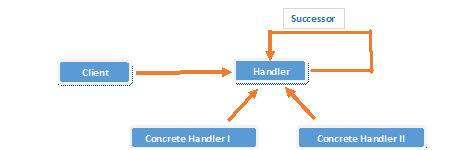
Chain of Responsibility pattern is a behavioral design pattern that actually makes the code lose coupling. It decouples the sender of the request to the receiver, where the chain of objects are there to process the request and the request used to starts or process with the first object in the chain, it proceeds if that object has the solution otherwise the request is forwarded to next object in the chain in order to handle or process that request. This chaining will happen until finding the solution object is in the chain.
 
GOF states that – it “Gives more than one object an opportunity to handle a request by linking receiving objects together.”
Picture

Handler – interface to handle the requests
 
Concrete Handler – A request handler that handles the request that they are responsible for, otherwise it sends the request to its successor.
 
Client – send the request to the handler to process the request. The first handler object in the chain would be invoked by the client.
 
Fore.g.
 
java.util.logging.Logger, javax.servlet.Filter are the examples that are followed by a chain of responsibility design pattern.
Let us take an example of Gmail, where we could see the mails are categorized as Primary, Social, and Promotion.
 
Social – Emails from Facebook, Twitter, Google plus are in the social category

Promotion – Emails from Paytm, Flipkart, Amazon offers are in the promotion category

Primary – Other emails from people and friends are companies are in the primary category

We can also have our own folder or category or rule for the basis of the incoming email on the subject, from, to, and all.
So, how could we do this in code with good design?

// Handler interface
 
public interface GmailHandler {
 
   public void setNext(GmailHandler gmailHandler); //to set next handler
 
   public void handleRequest(Email email); //to handle or process the emails
 
}
// Request object
 
public class Email {  
 
   private boolean is Social;
 
   private boolean is Promotion;
 
   private boolean is Primary;
 
   private Boolean is Spam;
 
   public boolean is Social() {
 
         return is Social;  // returns true when emails from facebook, twiiter, google plus
 
    }
 
  public boolean is Promotion() {
 
         return is Promotion; // returns true when emails from paytm, flipkart, amazon offers     
 
    }
 
  public boolean is Primary () {
 
        return is Primary; // returns true when emails not from social and shopping sites      
 
    }
 
   public boolean is Spam() {
 
         return is Spam;      
 
    }
 
   // more members and methods on content of email and other details
 
}
// Concrete Handler or Request Handler
 
public interface SocialEmaiHandler {
         
        private GmailHandler handler;

public void setNext(GmailHandler handler) {
 
        this.handler = handler;
 
   }
 
   public void handleRequest(Email email) {
 
         if(email.isSocial()) {
 
                    // proceeds or handles social email contents, keeps in social category
 
          } else {
 
                   handler.handleRequest(); // proceeding with next handler in the chain
 
          }
 
   }
 
}
// Concrete Handler or Request Handler
 
public interface PromotionEmailHandler {
 
   private GmailHandler handler;
 
   public void setNext(GmailHandler handler) {
 
        this.handler = handler;
 
   }
 
  public void handleRequest(Email email) {
 
         if(email.isPromotion()) {
 
                    // proceeds or handles promotion email contents, keeps in promotion category
 
          } else {
 
                   handler.handleRequest(); // proceeding with next handler in the chain
 
          }
 
   }
 
}
// Concrete Handler or Request Handler
 
public interface PrimaryEmailHandler {
 
   private GmailHandler handler;
 
   public void setNext(GmailHandler handler) {
 
        this.handler = handler;
 
   }
 
   public void handleRequest(Email email) {
 
         if(email.isPrimary()) {
 
                    // proceeds or handles primary email contents, keeps in primary category
 
          } else {
 
                   handler.handleRequest(); // proceeding with next handler in the chain
 
          }
 
   }
 
}
// Client
 
public class EmailClient {
 
  private GmailHandler handler;
 
  public EmailClient() {
 
        createProcessChain();
 
  }
 
  public void addRule(GmailHandler handler){
 
       if(this.handler == null)
 
             this.handler = handler;
 
       else
 
                this.handler.setNext(handler);
 
  }
 
  public void sendRequest(Email email){
 
       this.handler.handleRequest(email);
 
  }
 
  public void createProcessChain() {
 
       addRule(new SocialEmailHandler());
 
       addRule(new PromotionEmailHandler());
 
       addRule(new PrimaryEmailHandler());      
 
  }
 
  public static void main(String[] aa){
 
      EmailClient client = new EmailClient();
 
      Email email = new Email();
 
      email.setIsPromotion(true);
 
      client.sendRequest(email);
 
      Email email = new Email();
 
      email.setIsPrimary(true);
 
      client.sendRequest(email);
 
      Email email = new Email();
 
      email.setIsSocial(true);
 
      client.sendRequest(email);
 
  }
 
}

Conclusion: 
​
Just think that, if we didn’t follow this chain of responsibility design pattern how would we achieve this solution? We would write if and else if block on each case or category!!?? If we do so, it creates an n-path complexity problem to our code and it is very difficult to change the code to adapt a new feature i.e. each time we have to rework with the implementation.

So, the Chain of responsibility pattern helps us to make the code loose coupling and easy to adopt a new feature i.e. if we want to add a new rule or category like spam to email simply we can add a new concrete handler called SpamEmailHandler that implements Handler interface and most importantly we are adding the feature to our code without touching the existing implementation.
 
As you now know that chain of responsibility is a behavioral design pattern used by Java outsourcing company professionals to design the code. Any point you did not get can be asked in comments.

Related Articles:
How to Use Spring Batch and Connect It to Database in Java Development?How To Benefit Out Of Mobile Responsive Java Application Development And Make It Big?
1 Comment

USE OF SPRING CLOUD STREAM IN JAVA

1/16/2022

2 Comments

 
Picture
Technology: Spring Cloud Stream is the framework for building message-driven applications using spring boot. It supplies a way to combine with other applications, without depending on other applications; it utilizes Spring Integration to communicate with other applications.
Spring cloud stream gives abstractions, primitives for a simple way to develop message-driven applications.


Application Model
:
Spring cloud stream contains middleware and application core. The application will communicate with the outside world using input/output channels that are introduced by the spring cloud stream.
Picture
Channels are combined to middleware using binders; spring cloud stream gives different binders for another middleware like Apache Kafka, RabbitMQ.

Binder Abstraction:
Applications individually choose to which middleware they want to connect, by default spring cloud stream is dependent on spring boot auto-configuration, if more than one binder is present on the class path then, using the application.properties or application.yml we need to provide the binder configurations, we can also choose binder at channel level also, means for one channel we can use Kafka middleware and for another channel we can choose RabbitMQ channel, etc.


Persist Publish Subscribe: Communication between applications will use a publish-subscribe model where data is shared among the all connected client. The below diagram shows a typical flow between applications.

Picture
Where data is coming from HTTP source will send to a spring cloud stream application endpoint and it will process the incoming data and it will publish the data to middleware, the connected applications to middleware will get the data. This model will reduce the complexity of the producer and consumer, allow the addition of new applications to middleware without disturbing of existing flow. By using middleware native support spring cloud stream simplifies our job in publishing the messages to different middleware applications.
​

Consumer Groups:The Publish subscribe provides the ability to scale up by creating multiple instances of the application. When multiple instances of the same application running we need to consume messages by only one of the instances of the application. Spring cloud stream implements this behavior by providing the group name for consumers so that only one of the instances per group will be handled. We can specify the group name in application.properties file:

spring.cloud.stream.bindings.<channelName>.group

Picture

All the groups subscribed to groups will receive a copy of published data, but only one of the group members will receive the message from the destination when the group is not specified spring cloud stream assigns an anonymous group and independent single-member consumer group along with other consumer groups.

Durability: The applications sent to consumer group y default are durable, the binder implementations ensure that they are persistent, once at least one subscription for a group has been created, the group will receive messages, even if they are sent while all applications in the group are stopped. We must specify the group name so that no duplicate messages will be handled again.
 
Programming Model: We can turn the spring application into a spring cloud stream by adding @EnableBinding on one of the application configuration files, this annotation is meta-annotated with @Configuration and it triggers the annotation of spring cloud stream.


@Configuration
 
@Import({ChannelBindingServiceConfiguration.class,
BindingBeansRegistrar.class,
BinderFactoryConfiguration.class,
 
SpelExpressionConverterConfiguration.class})
 
@EnableIntegration
 
public@interfaceEnableBinding {
 
       /**
 
        * A list of interfaces having methods annotated with {@link Input} and/or
 
        * {@link Output} to indicate bindable components.
 
        */
 
       Class<?>[] value() default {};
 
}


This remark will accept one or more than one example contains methods which represent the bind methods.

Creating binding interface: Spring cloud stream application can have any number of input, output channels clarified in an interface remarked with @Input, @output, and we require to pass this interface in @EnableBinding annotation, this will trigger the spring cloud stream and creates orders,hotDrinks,coldDrinks message channels.

public interface Hotel {
 
            @Input
 
            SubscribableChannelorders();
 
            @Output
 
            MessageChannelhotDrinks();
 
            @Output
 
            MessageChannelcoldDrinks();
 
}

Customizing the Channel names: 
We can customize the channel name using value attribute in Input, Output annotation.

public interface Hotel {
 
            @Input("inboundOrders")
 
            SubscribableChannelorders();
 
            ...
 
}


The generated bound channel will named Inbound Orders.

Spring cloud stream provides 3 interfaces for common use cases. 

Sink: It is interface used for single inbound channel.

Source: It is interface used for single outbound channel.

Processor: It is interface used for both single inbound/outbound channels. Spring cloud stream does not gives any special handling for these interfaces, they supplied only for reference.

Injecting interfaces into Spring Beans: Then methods clarified in interfaces given in @EnableBinding annotation will generate a channel based on its type (like input channel for @Input and output channel for @Output), and using methods in interfaces we can send/receive the messages.

Injecting Message Channels Directly: Instead of depending these interfaces we can also directly inject channels directly into beans.


@Component
 
public class SendingBean {
 
            privateMessageChannel output;
 
            @Autowired
 
            publicSendingBean(MessageChannel output) {
 
                        this.output = output;
 
            }
 
            public void sayHello(String name) {
 
                        output.send(MessageBuilder.withPayload(body).build());
 
            }
 
}


MessageChannel is injected with channel name output, we can also customize by passing channel name to MessageChannel.


Eg: @Output("customOutput")
 
MessageChanneloutput();


Spring cloud stream also supports spring-messaging and spring-integration annotations like @SendTo, @MessageMapping,@Transformer,@ServiceActivator etc.

Binders: Spring cloud stream gives Binder interface for connecting with various middleware suppliers.
The interface has bindProducer method to return the producer, the method has three arguments, and first argument take the channel name, and second argument is the channel instance to send the messages, third parameter points to channel extra properties.

The interface has bindConsumer method is to return the customer, the method has four arguments, first argument refers to destination name, and second argument refers to logical group name, third argument refers to channel instance to receive the message and four argument refers to extra customers properties.


public interface Binder<T, C extends ConsumerProperties, P extends ProducerProperties> {
 
Binding<T>bindConsumer(String name, String group, T inboundBindTarget, C consumerProperties);
 
Binding<T>bindProducer(String name, T outboundBindTarget, P producerProperties);
 
}

Specifying Properties for each channel:
We can also clarify properties for each channel like clarifying binder, binder configuration, content-type of the message, max-retries for each channel etc.
We can clarify channel properties using prefix in application.properties file.


spring.cloud.stream.bindings.<channelName>


List of properties assisted by channel specific are expose in BindingProperties.java file.
We can specify the manufacturer related properties using prefix spring.cloud.stream.bindings.

<channelName>.producer

Consumer properties using spring.cloud.stream.bindings.<channelName>.consumer prefix.

We can also specify the host details of binder using 

spring.cloud.stream.binders.<binding-name>.environment.spring.rabbitmq.host property.


Conclusion: Spring cloud stream is framework for growing stream based application in an simple way, which is used to expand application in flexible way(independent applications), we can lightly hosted on spring data flow servers, we can combine with different middleware applications using native middleware support. We can also identify the global configuration and also channel specific binder properties, and also if the application is hosted on cloud using cloud connectors we can identify the cloud instances of middleware applications.

You can download the producer and consumer of the applications using below github repositories.

https://github.com/sravan4rmhyd/Spring-Stream-RabbitMQ.git

Have you tried Spring Cloud Stream for java web development yet? Share your experience with the readers and let them know about this framework.

Related Articles:
How can you become a professional Java developer in 6 months?
​Boost your revenue by teaching cybersecurity skills to your staff.
2 Comments

Tuning Tips Improve the Performance of Your Web Application In Asp.Net

1/3/2022

0 Comments

 
Picture
​When one is building a web application, it is important that he/she keeps the performance of the .net application good enough so that the customer he/she wants to sell the application to doesn’t walk away from the application. The application should be activity in such method it doesn’t load too slowly or there's ungainly interaction that may cause the client to appear the opposite way.
Ways to better the presentation of your web application

You can exist various ways that may grow up the performance of his/her application but the 15 main methods are:-
  • Analyze everything
It is the foremost and most vital factor one has to do whereas creating an application is that he has to set a baseline on the performance that his application ought to follow. Changes made in a site just to better the performance of the application can always backfire. It is very popular that performance calculates must be a dedicated job. Best way to do this is using Prefix which allows one to highlight some of the long files of JavaScript etc.
  • Choose the low hanging fruit on Priority
When one has his list of sub-applications/pages (in case of websites), he should choose the one which might have the foremost impact on the users directly, which might provide you with an attracting capital of the politics to optimize and one can feel that the worldwide coding is going to make a big impact on it specific page.

  • Enable compression
It is a well-known fact that the HTTP is not an effective protocol and it doesn't allow any compression in the content. One factor to be taken care of is that few of the resources are pre-compressed like pictures but the html, CSS, JavaScript files are generally text. Best way to try this is exploitation gzip that compresses the html file to 2/3 of the original size.
  • Reduce HTTP request
When the situation occurs that the connection should be opened by the browser, then a tax has to be given. It is basically the connection of TCP/IP. When we know that the browser limits the total amount of requests that can run at once the best way to improve the performance is by decreasing total requests.
  • Using HTTP/2 over SSL
HTTP/2 introduced a lot of useful optimizations. Mainly it extended the compression to protect the header of the protocol. It also allowed the transfer of multiple files at once using its pipelining mechanism.
  • Minimize the files
Every known compression algorithm used to compress the html files could be a lossless compression algorithm that means the output of compressing and decompressing of a file is usually a similar. If there's some basic plan of what specifically must be compressed, we might get additional memory when the scale is reduced.

  • Load CSS first
The reason for this is often that once a browser is downloading the webpage, it starts to render the app whenever it has the content that is finished with the assistance of a game of idea as a browser has no plan on the impact of the render on the content of the page he rendered. By loading CSS first, it will try to render it which will have no impact on the file.
  • Load JavaScript in the last
Similar to why the code of CSS ought to be priority, JavaScript files contain import content whose rendering may have an effect on the content of the page thus by rendering it last less impact on the content are going to be there.

  • Shrink your images
In an ideal situation, one's website shouldn't contain images but an image is used as an important marketing tool so shrinking the image would be a good option to reduce the file size.
  • Cache your page
Going to the database to look to re-enter the complex page it is better to cache the page and subsequent requests using that data.
  • Check your queries
A prefix is a good tool to highlight a problem but if a problem is way too many, it will take time to correct them. To right the issue one should use thirsty loading over lazy loading and examine the prediction.
  • Cache parts of the pages
The best way to keep the performance of the page in check is not only caching the page but also parts of the page to reduce chances of error.
  • Shrink your libraries
  • Content delivery network
The best way to supply data to the user is to keep the data close to the user using CDN nodes.
  • Avoid client-side redirect
These 15 ways as mentioned above are good methods to improve the performance of an ASP.Net application which would help in keeping the customers interested in the product one is selling to them. Following these methods go in a long way to increase the sales of a web application to the user.

​Related Articles:

Implementation of AI and Machine Learning in .Net Apps
Top Benefits of Choosing Asp.Net as a Final Year Project
0 Comments

The importance of chatbots in customer service driven businesses

12/22/2021

1 Comment

 
Picture

Big data can prove to be of importance in developing customer - centric chatbots


​How simple would it be if you can set reminders, order, shop and get queries answered almost instantly through a single messaging app? In 2016, during a keynote, Satya Nadella CEO at Microsoft said that "Chatbots are the new apps".

Have you been including chatbots when you are preparing your company’s vision for the big data? If not, here’s why you should.

An introduction to chatbots

​Chatbots are a simple way of solving everyday challenges. One of the key reasons for the recognition of the chatbots is that the universality – it may be utilized in any space within the digital world. From banking to delivery services, chatbots have an important application in customer service. According to Gartner, by the year 2020, 85% of customer interactions will be managed without a human, meaning chatbots are going to replace a vast percentage of human involvement in customer service. When people get used to these prompt conversations with chatbots, the normal human interactions may be seen as a more exasperating routine.
RChatbots can replace the mundane, repetitive work that humans have been doing for so long. Chatbots have introduced a better way of doing the same work in a short time with less manpower and at less cost.

Chatbots are not just created to solve the normal problems but instead, it is made to learn from its responses, store data and refine itself better and increase its efficiency. This is where the value of big data lies.
​
The intersection of big data and chatbots

Big data is an integral part of the chatbots. Big data is the governing element which enables the accuracy with which the chatbots are developed and run. Big data provides an answer, checks the authenticity and decides the way the conversation should be progressed by the chatbots.

The digital world is overflowing with data most of which is left unused. The chatbots are one of the best ways to collect the data and put it to use in the most progressive way. Big data can enable the growth of chatbots at a rapid pace enabling customer services to reach a new high.


Nowadays, people look for simpler ways to get work done and therefore find it easier to interact with chatbots and get the work done, rather than waiting on the phone to talk to someone. According to Chatbots Magazine, chatbots can save up to 30% of the total expenses in customer support services. So, chatbots can't only upgrade client service however it may also bring down the price incurred for client services.

One of the simplest ways in which of aggregation information for business intelligence is thru chatbots. The data obtained from the chatbots can also be put to use for other business initiatives. Chatbots can perform a dual role in relation to big data.

  1. Chatbots can collect and analyze data
  2. Chatbots can retrieve the data and put it to use

These two operations are instrumental to big data and therefore chatbots and big data may be seen to be codependent.

How chatbots make the most out of big data

​When a customer speaks with a chatbot, the person inadvertently gives out some data in exchange for any information or work to be completed. If a thousand customers interact with a chatbot in a day, the amount of information it has received in turn from the people will help in providing better replies to the next set of customers. As a result, the chatbot will now be trained to provide an appropriate and efficient response. The more data the system collects, the better its performance will be.

Along with the natural language processing (NLP), the system will be equipped with data to provide accurate results such as the ability to view customer demographics, get accustomed to slang, the usage of words and the different ways in which the queries are asked and any more information that a user expects to get from a chatbot. Armed with this data, the developers will be able to develop customer-centric chatbots.

Over a period of time with the consumption of a vast amount of data, these chatbots will be able to talk like a human and give that intimate touch in its conversations, which is exactly what the customer needs. It can be trained to answer questions from an 80­-year-old and an 8-year-old. Chatbots can also be developed to analyze the human emotions and give a suitable reply in consideration. All of those clarification within the behavior of chatbots are not possible without big data.

Big data and chatbots along have a lot of potentials that are however to be tapped into. The future holds some exciting developments for this collaboration and the world is keenly looking forward to an optimal customer experience.

Related Post:


Role Or Impact Of Methodology To Research On Big Data
What's happening in the Big Data world?
1 Comment

A Long Dive into the Career of Software Developer

9/22/2020

5 Comments

 
​You have a ton of the attributes of an individual who might make an incredible Programming Engineer / Software Developer. You're captivated by the opportunity, yet you're most likely wondering: What would a Programmer or Software Developer do? What is some ordinary Software or Programming Developer's work responsibility? Let’s dive long into their professional career opportunity!

Read More
5 Comments

What Role Does Culture Play For Java Outsourcing?

7/28/2020

1 Comment

 
Culture and transmissions are two things that effort as remarkable points in Java outsourcing. For years, IT consulting have notified of depending on separate coders and influenced the significance of team delivery. Today, software expert has moved to core to business transformation and innovation. This transition in large scale industries has put intense focus on team performance.
 
To get successful results, teams must be performing with Great Spirit and there must be behavioral alignment with a company they are connected and with business as a whole. In precise, software developers and agile teams can achieve success by relying on Java outsourcing services that fit in their culture just like the skills of individual team members.
 
We are talking about well-established organizations and not the struggling ones or outsourcing companies that purposefully make teams with one skilled developer and fill in the rest with fresher. Well-established matured organizations take culture as important as a skill for the success of agile teams.
Picture
Alignment of Culture for Trust Building
 
Our development teams considered as interlopers or outsiders who don’t act, look, or understand the company and its requirements? Or are they considered as equals and trusted partners, as people who understand the products of the company?
 
Not trusting the other is a natural reaction of humans that leads to diminished success. People don’t often trust those who look, act, perform, or interact differently, due to the impulse, they simply reject them without even knowing their qualities and skills level.
Picture

​Getting in touch with the cultural level builds trust between the company and outsourced teams as a whole. They eventually gain an insider status as well as credibility. With this credibility, teams get confidence to work in unity. Due to cultural fit, these teams look more trustworthy, which allows the team to bring suggestions for the latest features and products along with solutions for the present problems.
 
As skill levels of developers flatten out, large scale industries should consider communication and culture style as key factors in java outsourcing IT decisions. This behavior will save time, resources, and frustration altogether.

Read more - 
Top 5 Innovative Business Trends That You Will See in Future
What Skills Does a Data Engineer Need in 2021?
1 Comment

JavaScript is Best for Getting Job 2020?

6/18/2020

0 Comments

 
Picture
JavaScript may have gotten an ideal decision for front-end programming, yet creators can't deny the way that JavaScript mimics what has gone before in a couple of various ways.
 
It's a procedural language like C, COBOL, C++, Python, C#, and Java. JavaScript is the equivalent than these lingos, yet there is only a solitary uncommon case it has a code multifaceted design issue.
 
How could JavaScript have a flightiness issue? It is a result of the short life. JavaScript scores the circumstance in programming web headway history is by and by rising in a move from commonly back-end to front-end improvement, which was influenced by the phone upset.
 
Right when you get some data about the most incredible programming language, many will say it's JavaScript. What is the clarification that makes them name JavaScript as the most mind boggling programming language?
 
Eccentrics explained as the ordinary degree of code that significantly sunk into each endeavor. Quiet aides in researching more than 400 billion code lines all through an enormous number of java web progression adventures.
 
JavaScript also best among lingos that product engineers need the most to find support.
 
Other Programming Languages
 
Java is the most broadly perceived web improvement language used by engineers today. It is the inside language required for Android improvement. If you wish to secure a CS degree, or even structure nearby Android applications, you need to make a start with Java specifically. 
Picture
Python language used at Google, and incredibly, various schools are at present demonstrating this language to their understudies. The real power of Python is in the data, so if you have to transform into a data scientist, you first need to learn Python. What's more, it has a web structure named Django, which makes Python an ideal option for making web applications.
 
Ruby is the most regarded programming language. Ruby on Rails offers the ability to make applications for the web. It resembles Python from numerous perspectives, yet with little differences, Ruby scores more. It was an incredibly powerful and welcoming open-source organize.
 
JavaScript is so far a requirement for each architect planning to amass a site. It not wanted to manufacture incredible, versatile web applications. Moreover, the essential language will be the hardest for you. Regardless, when you learn it with dedication and attempts, you will get each code and see every component with no issue.
 
Aegis SoftTech offers the best Java web headway benefits over the world. You can connect with their authorities and send requests related to web and flexible application headway.
0 Comments
<<Previous

    RSS Feed

    SoftWeb Solution

    Aegis Soft Tech is a well-known name in IT industry. We have stable team of resources working on various technologies for the last 10 years. We are also prominent as 'Future of IT ' in India. Today, we are giving quality IT outsourcing services to our clients with wonderful exposure to different IT domains.

    Categories

    All
    3tier-app
    Angular 2
    Angular JS 2
    Aspnet Development
    Aspnet-development
    Big Data
    Java
    Java Developers
    Java Developers India
    Java Development
    Java Development News
    Java Development Team
    Java EE Development
    Java Outsourcing
    Java Programmers
    JavaScript
    Java Update
    Java Web Development
    .Net Development
    Outsource Your Java Development
    Python Development
    ServiceNow
    Software Development

Powered by Create your own unique website with customizable templates.